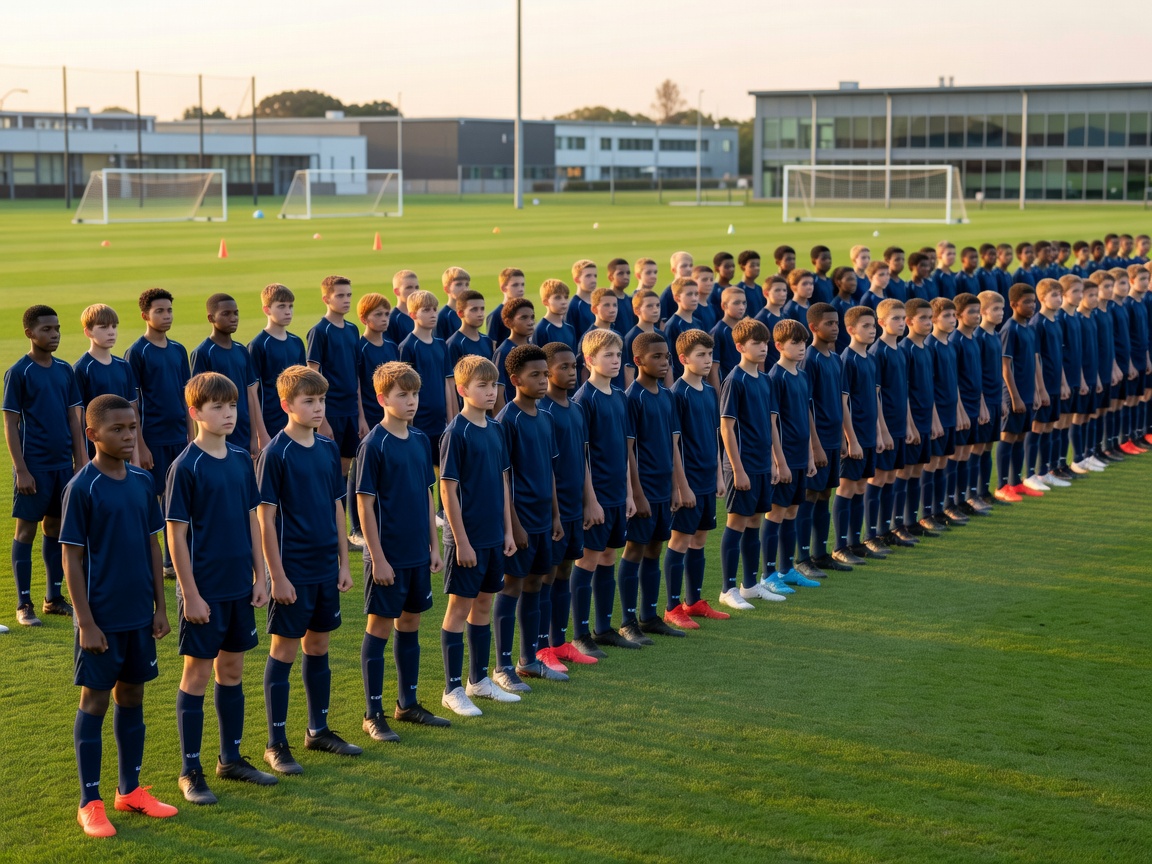
How selection works
Elite academies are selective and mostly scouting-led. For the vast majority of players, the path begins not with an application form but with being noticed while playing for a local club.
1. Scouting
Clubs such as Ajax, Benfica, Sporting CP, Bayern Munich, Red Bull Salzburg, Dinamo Zagreb and Anderlecht employ scouts who watch local, regional and partner-club football. Many clubs also run partnerships with grassroots clubs in their region.
2. Invitation and trial
Promising players are typically invited to train with the relevant age group for a period of assessment. Coaches observe how a player performs in sessions and games, and how they respond to instruction.
3. Federation routes
Clairefontaine is different: as the French Football Federation's institute, its pre-training programme selects young players from the surrounding region through the federation's detection process, and those players continue their pathway at professional clubs.
4. Offer and registration
Successful players are offered a place and registered with the club, subject to national association rules. Arrangements for schooling and, where relevant, residence are agreed with the family.
Routes compared
| Route | How it starts | Best for |
|---|---|---|
| Club scouting | A scout watches a player's matches | Players active in competitive local football |
| Partner club | Referral through a club linked to an academy | Players at affiliated grassroots clubs |
| Federation detection | Regional selection by a national federation | Players within that federation's catchment |
| Announced open trial | A trial published on official club channels | Players who meet the stated criteria |
What is assessed
Each academy has its own criteria, but assessment usually covers four areas. Ajax's TIPS model — technique, insight, personality and speed — is a well-known way of framing them.
- Technical: first touch, passing, dribbling and use of both feet.
- Tactical: decision-making, positioning and understanding of the game.
- Physical: speed, agility and coordination, judged with growth in mind.
- Personal: attitude, coachability, resilience and teamwork.
International players
FIFA's Regulations on the Status and Transfer of Players restrict international transfers of players under 18. There are limited exceptions, such as certain moves within the EU/EEA for players aged 16 to 18, or when a player's family moves country for reasons not linked to football. The rules are detailed and change over time, so families should seek guidance from the relevant national football association before making plans.
Red flags
Wherever young talent is in demand, some people try to profit from families' hopes. Be cautious of:
- Paid “trials” claiming an official link to any academy listed here.
- Agents or intermediaries promising guaranteed places.
- Requests for large upfront payments for travel or registration.
- Offers that cannot be confirmed on the club's official website.
Good signs
- Contact comes through official club channels
- Clear information on schooling and welfare
- Parents are involved at every step
Warning signs
- Pressure to decide or pay quickly
- Vague answers about who runs the trial
- No written, verifiable details
Costs and fees
Swayscrewparade does not list fees or costs. Selection into elite club academies is generally by scouting and invitation rather than open paid enrolment. Any separate paid camps or clinics should be checked directly on official club channels before booking.