Overview
Europe's leading academies share a goal — turning talented young players into professionals — but they approach it in very different ways. Some are run by clubs with a single, clearly defined style of play; one is operated by a national federation.
This guide profiles each of the nine academies featured on Swayscrewparade, describing where they are, who runs them and what they are known for. It deliberately avoids rankings: the right academy is the one whose environment fits an individual player, not the one at the top of a list.
The nine profiles
Clairefontaine National Football Institute — France
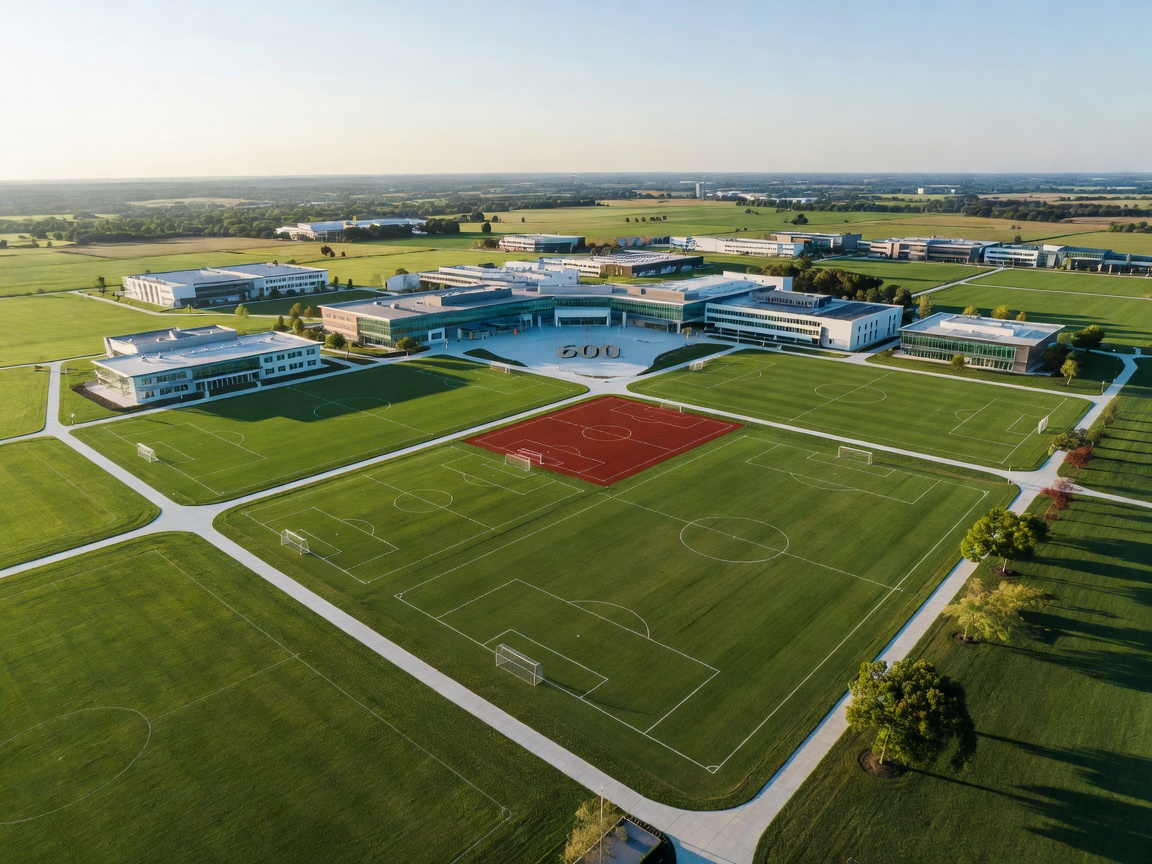
Operated by the French Football Federation (FFF), the national institute at Clairefontaine-en-Yvelines sits in wooded countryside south-west of Paris. It is not a club academy: its pre-training programme brings in young players from the surrounding region for a period of intensive development before they continue at professional clubs. The same estate is a home base for France's national teams and a hub for coach education, giving the site a unique role at the centre of French football.
Ajax Academy — Netherlands
Ajax's academy trains at De Toekomst — “The Future” — in Amsterdam. It is strongly associated with an attacking, possession-based identity and with the TIPS model, which frames player assessment around technique, insight, personality and speed. Young players are encouraged to be comfortable on the ball in tight spaces and to understand more than one position, reflecting a long Dutch tradition of tactical flexibility.
La Masia — Spain
La Masia originally referred to the old farmhouse near Camp Nou that housed young FC Barcelona players. Today the academy's residence and training sit within the Ciutat Esportiva Joan Gamper in Sant Joan Despí, just outside Barcelona. The name has become shorthand for a positional, possession-oriented style taught from the youngest age groups, alongside a strong emphasis on education and values.
Sporting CP Academy — Portugal
Sporting Clube de Portugal's academy is based in Alcochete, across the Tagus from Lisbon. The complex combines residential facilities, training pitches and schooling support in one location, giving young players a structured daily routine. It is one of Portugal's best-known player development centres and belongs to a wider multi-sport club.
Bayern Munich Campus / youth academy — Germany
The FC Bayern Campus in the north of Munich brings the club's youth teams, a boarding facility and academy staff onto a single site. The aim is to connect junior football more closely to the professional pathway in the same city, with a clear route from the youngest squads towards senior football.
Red Bull Salzburg Academy — Austria
Red Bull Salzburg's academy is known for a high-intensity, pressing-based playing style that is consistent from youth level upward, so young players learn the same principles as the first team. FC Liefering serves as a stepping stone into senior football for many academy graduates.
Dinamo Zagreb Academy — Croatia
Dinamo Zagreb's youth system in the Croatian capital is a central part of Croatian football's player pathway. It places a strong focus on technical development and early exposure to competitive senior football.
Benfica Campus — Portugal
The Benfica Campus in Seixal, south of Lisbon, houses the club's youth teams, residence and training fields. It combines football with education and support services and is widely cited as one of Europe's leading player development centres.
Anderlecht Academy — Belgium
RSC Anderlecht's academy at Neerpede, on the western edge of Brussels, is a cornerstone of Belgian youth football. It draws talent from the city's diverse, multilingual communities and has long connected local players with the professional game.
Comparison
| Academy | Country | Run by | Associated with |
|---|---|---|---|
| Clairefontaine | France | Federation | Regional pre-training, national teams, coach education |
| Ajax Academy | Netherlands | Club | TIPS model, attacking possession |
| La Masia | Spain | Club | Positional, possession-oriented play |
| Sporting CP Academy | Portugal | Club | Residential campus with schooling support |
| Bayern Munich Campus | Germany | Club | Single-site youth and boarding campus |
| Red Bull Salzburg Academy | Austria | Club | High-intensity pressing, FC Liefering pathway |
| Dinamo Zagreb Academy | Croatia | Club | Technical focus, early senior exposure |
| Benfica Campus | Portugal | Club | Integrated campus in Seixal |
| Anderlecht Academy | Belgium | Club | Urban, multilingual talent base |
Federation centre vs club academy
Federation centre strengths
- Development not tied to a single club's needs
- Players continue their pathway at professional clubs
- Close link to national coaching standards
Club academy strengths
- Direct route towards a specific first team
- One consistent game model across age groups
- Integrated campus, residence and education
Neither model is inherently better. A federation programme offers breadth and neutrality; a club academy offers depth within one identity, but also competition for places inside that single structure.
How to read these profiles
Use these profiles as a starting point, not a verdict. Style of play, language, distance from home, schooling and the realistic chance of playing time all matter. Official club and federation websites are the best source for current programmes and contacts.